

When Do You Need To Replace A Safety Harness?

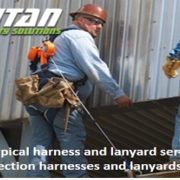
We get many calls asking about the “life expectancy” of harnesses, lanyards and rope. Of course, there are many factors involved and no one “set in stone” answer, but a lot depends on how much you use your harness and the ways you use it. Even where you store your gear is a factor. OSHA regulations require employers to provide workers with fall protection personal protective equipment (PPE) in settings where they work or walk on elevated surfaces. PPE works in one of two ways. As a fall arrest system or as a fall restraint system. Typically, a safety harness is combined with some other fall protection element like a shock absorbing lanyard or a self-retracting lifeline.
The fall protection industry recommends 2 to 3 years as a service life for a harness or lanyard in use. They recommend 7 years for the shelf life.
There is some difference between industry standard practice and OSHA regulations regarding safety harnesses that have been involved in a fall, or in OSHA parlance, PPE that has been “subjected to impact loading.” It is industry standard practice to remove from use and destroy all harnesses involved in a fall. Many fall protection companies recommend cutting up harnesses that have been deployed during a fall, which in turn removes the temptation to re-use potentially unsafe PPE.
 Safety harnesses are made with a variety of built-in fall arrest indicators, such as a red fabric lining that becomes exposed during the stress of a fall, which make it easy to determine if the PPE needs to be removed from use. Unfortunately, we do see harnesses still in use despite clearly having been in a fall. This often happens when workers do not report the falls, fearing they may be cited for a violation, reprimanded, or have wages cut as a result of an accident.
“If you’ve fallen, the harness has served its purpose,” says Alberto Quiroga at Titan Safety Solutions.
The service life of a rescue harness is closely related to the life of a rescue rope both are used in the same environments, both are made from nylon or polyester, and both receive similar levels of inspection and care. Since harnesses are worn on the body, they are generally better protected than the ropes. On the other hand, harnesses rely on the stitching to hold them together, and due to its small diameter, the thread can be more susceptible to abrasion, aging, and chemical damage than web or rope.
Never take chances when there’s any doubt about the serviceability of a life safety product. Partnering with a certified company that understands fall protection regulations is an important step towards becoming OSHA compliant.
To learn more about fall protection safety harness inspection and certification, or to request a quote, contact Titan Safety Solutions for more information.